
What Happened When Helen Brought Her First Prints to Review Night
A short story about Helen, who arrived with a shoebox of unsorted prints and left with the order of a photo essay, as Luc Tremblay saw it happen at a Print Review Night.
Luc Tremblay · · 5 min read
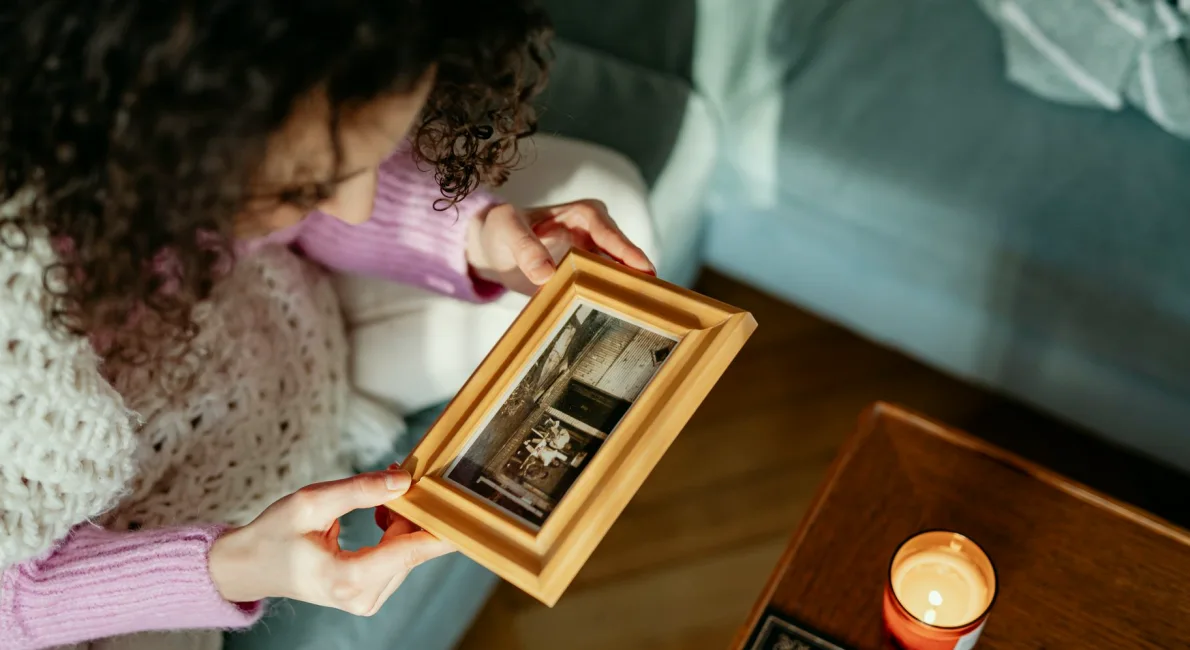
A shoebox on the long table
Helen arrived early on a damp evening, carrying a shoebox held shut with an elastic band. She had told me by e-mail that she was not sure she belonged, since she had only taken up photography after retiring from the school office. I said the table had room for everyone, and it does. We set out chairs around the long table in the front room, laid down a clean sheet of paper, and waited for people to drift in with their folders and sleeves.
She lifted the lid slowly. Inside were about forty prints of her street, taken over two autumns: a neighbour raking leaves, a corner shop window at dusk, a child's rubber boots left on a porch step. None were numbered. Some were curled at the edges from the damp. She apologised twice before the first print left the box, and I told her that apologies were not required at this table, only prints.
Spreading the work out
Our first rule on review nights is simple: nobody speaks about a print until it has been looked at in silence for a full minute. Helen laid out her forty on the table in rough rows, and the other members, six of them that evening, walked around the edges with their hands behind their backs. It is a habit borrowed from gallery visits, and it slows everyone down in a useful way.
When the minute ended, the comments were gentle and specific. One member liked the porch boots because the light fell across them from the left. Another asked about the corner shop window and whether she had stood inside the doorway to take it. Helen answered carefully, and I noticed her shoulders drop. She had not been judged; she had been asked questions, which is a different and kinder thing.
- Look in silence for a minute before anyone comments
- Describe what you see before saying what you like
- Ask the photographer a question rather than giving a verdict
Finding a thread through forty pictures
The part Helen had not expected was sequencing. She had assumed that feedback meant being told which pictures were weak. Instead we spent most of the evening moving prints around, trying them in pairs, then in a line of eight. I slid the rake-and-leaves print next to the boots on the porch, and suddenly a quiet theme appeared: the small marks people leave on a street when they think nobody is watching.
She went silent, then laughed. She said she had never seen those two pictures as related. That is what sequencing does. It does not improve a single frame; it reveals what a set of frames has been saying all along. We tried a second order, starting with the shop window, and compared how differently the story opened. Helen preferred the first, and made the choice herself.
What we asked her to leave out
Cutting is the hardest conversation on any review night, and I try to handle it with care. Of her forty prints, we suggested Helen keep about twelve for the essay. Several of the lovely ones, a sunset over the water tower among them, did not belong to the story of her street, and she accepted that more easily than I had feared.
One print gave her pause: a neighbour's face, caught mid-laugh, taken without asking. A member raised it gently. Our community guidelines ask that people shown in an essay know about it and are willing, so Helen decided to knock on that door before including the picture. I did not push either way. The decision was hers, and I think she was glad the question had been raised at the table rather than later.
- Keep only what serves the thread you have found
- Set aside beautiful frames that belong to a different story
- Check with anyone recognisable before a picture goes further
Printing it properly
Before the evening ended we talked about paper. Helen's prints came from a home inkjet on glossy stock, and the curling and glare were making it hard to judge tone. I suggested she try a matte paper for the final twelve and print them a little darker than looks right on screen, since lamplight on a wall tends to flatten shadows. These are small practical points, but they change how a set reads.
I showed her how I lay out sleeves in the shared archive, so a finished essay can be found again in a year. She wrote the order on a card in pencil and slipped it into the shoebox, now holding only the twelve. It looked a good deal smaller and a good deal more serious. She mentioned she might return in a few weeks with the reprinted set.
Weeks later, a thinner folder
Helen did come back, on a cooler evening with the first frost on the cars outside. This time she carried a slim grey folder instead of the shoebox. The twelve prints were on matte paper, numbered lightly on the back, and she had knocked on her neighbour's door, who agreed to the laughing portrait on the condition of seeing the print first.
We laid the set out again, and this time the silent minute felt different. The thread was there for everyone to see. Someone suggested a final image to close the sequence, the boots again but empty, taken at first light, and Helen said she had one like it at home. I watched her write that on her card, and thought this is why we hold these nights.
Helen's story is not unusual. Most people arrive at a Print Review Night doubting that their pictures are ready, and most leave with a smaller, clearer set and a sense of what their own work is about. The table, the silence and the shuffling of prints do the real work. If you have a box or folder of prints in a cupboard this autumn, bring them along and let the table help.