
Portrait Study Evenings: What Changes in the Room This Season
As the light drops earlier, our Portrait Study Evenings shift toward window light and a slower pace. Here is how the room is set up and what members can expect.
Luc Tremblay · · 6 min read
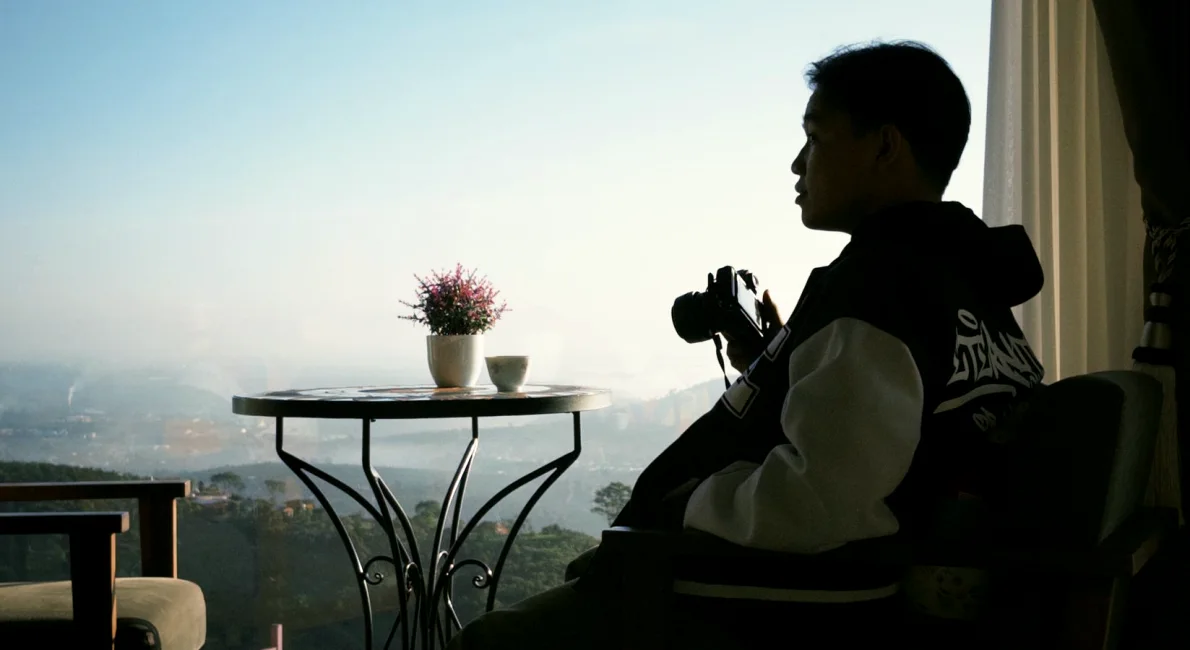
Why the evenings feel different now
Every autumn the light in our room at Front Street changes character. In summer the windows give us a bright, flat wash through most of the afternoon. By mid autumn the sun sits lower, the colour warms, and the shadows on a face become longer and softer. Members who joined us in spring often tell me it is as if the room has been rearranged, though nothing has moved except the sky.
This is the stretch of the year I look forward to most as coordinator. Portrait Study Evenings are hands-on sessions about natural light and window light, and the season gives us more to work with than any lamp could. A single window, a plain chair and a willing neighbour are enough for an honest portrait, and the lower sun makes that simple setup feel generous.
The earlier dusk also changes the schedule. We now begin while there is still usable daylight outside, so the first hour is spent near the glass, and the later hour moves to the quieter corners of the room.
How the room is arranged
For the coming evenings I have placed the main chair about a metre and a half from the largest window, turned at a slight angle so the light falls across one side of the face. A cream card and a charcoal one stand nearby. The cream card lifts the shadow side gently, while the charcoal one deepens it when a member wants a more serious mood.
Members take turns in three roles: the person behind the camera, the person sitting, and a helper who watches the light and calls out what they notice. Rotating through all three is deliberate. Sitting for a portrait teaches patience and a fair amount of empathy, and it makes people more considerate when they photograph others later.
Chairs, cards and a small table of tea things are the only furniture. I keep everything else out of the frame on purpose, so attention stays on the face and the light.
- One large window as the main light source
- Cream and charcoal cards for shaping shadow
- Three rotating roles: photographer, sitter, light watcher
Working with willing neighbours
Portrait Study Evenings rely on people who choose to sit for us. Some are members, and some are neighbours who have been asked politely and who understand what the pictures are for. Nobody is photographed without agreeing first, and a sitter may ask to see the frames and have any of them set aside.
I introduce each sitter at the start and explain in plain words what will happen during their turn. Most people relax once they hear that nothing will be published without their say. The honesty of a portrait depends a good deal on that ease, and you can see it in the shoulders and the eyes.
We also talk about what a sitter owes the photographer and the other way round. A portrait is a shared piece of work, and the conversation before the shutter is part of it.
What members practise through the season
The exercises this season are modest and repeatable. We begin by simply watching how the window light moves across a face as the sitter turns by a few degrees. Then members make a short series of frames from one position, changing only the angle of the head, so the effect of each small decision becomes visible on the back of the camera.
Later in the evening we try the same sitter at different distances from the glass. Close to the window the contrast is strong and the edges are crisp. Further back the light spreads and the mood quiets. Members often prefer the second, and then discover that a third distance in between suits the person even better.
None of this needs special equipment. A phone with a steady hand works as well as a camera for most of these studies, and several members use exactly that.
- Reading the direction of window light on a face
- Changing head angle while holding the camera still
- Comparing near and far positions from the window
Practical notes before you come
Dress simply, because patterns and bright logos pull the eye away from the face. Plain knits and solid colours photograph best in autumn light. If you plan to sit, bring a favourite scarf or jacket you feel at ease in, since comfort shows. If you plan to shoot, bring whichever camera you actually use at home rather than borrowing something unfamiliar.
The room can be cool once the sun goes down, so a warm layer is sensible. We keep tea available through the evening, and there is time to chat between turns. Evenings are relaxed, and nobody is expected to perform or to have previous experience with portraits.
If you have a particular person in mind who might like to sit for the group, tell me beforehand and I will help with the invitation and the explanation of what we do.
What I hope the evenings give people
My hope is modest. I would like each member to leave with one portrait they are quietly proud of, made in plain light, of someone who was glad to be seen that way. That outcome matters more to me than technique, though technique tends to follow when people care about the person in front of them.
Over the years I have watched the habit of looking carefully spread beyond these evenings. Members tell me they notice how light lands on a kitchen table or a bus stop face, and that they have started to ask before they photograph. That attentiveness is the real result of the evenings, and the season gives us a generous setting for it.
The darker months suit Portrait Study Evenings well. A low sun, one window and a willing sitter give members everything needed to learn how light shapes an honest face. If you have been curious, come along this autumn, bring a camera or simply a pair of attentive eyes, and take a turn in each of the three roles. We keep the room warm and the pace slow.