
How a Story Circle Is Set Up: Chairs, Pace and Consent
A look at the quiet tools behind our story circles: the seating, the ground rules, the pacing and the small agreements that let members retell personal stories with care.
Priya Nair · · 5 min read
Why the method matters more than the topic
When people hear about a story circle, they usually ask what we talk about. I understand the question, but after years of hosting these evenings I think the better one is how we talk. A memory about a grandmother's kitchen or a first winter in a new town can go in many directions, and the method decides whether the teller leaves feeling heard or feeling exposed.
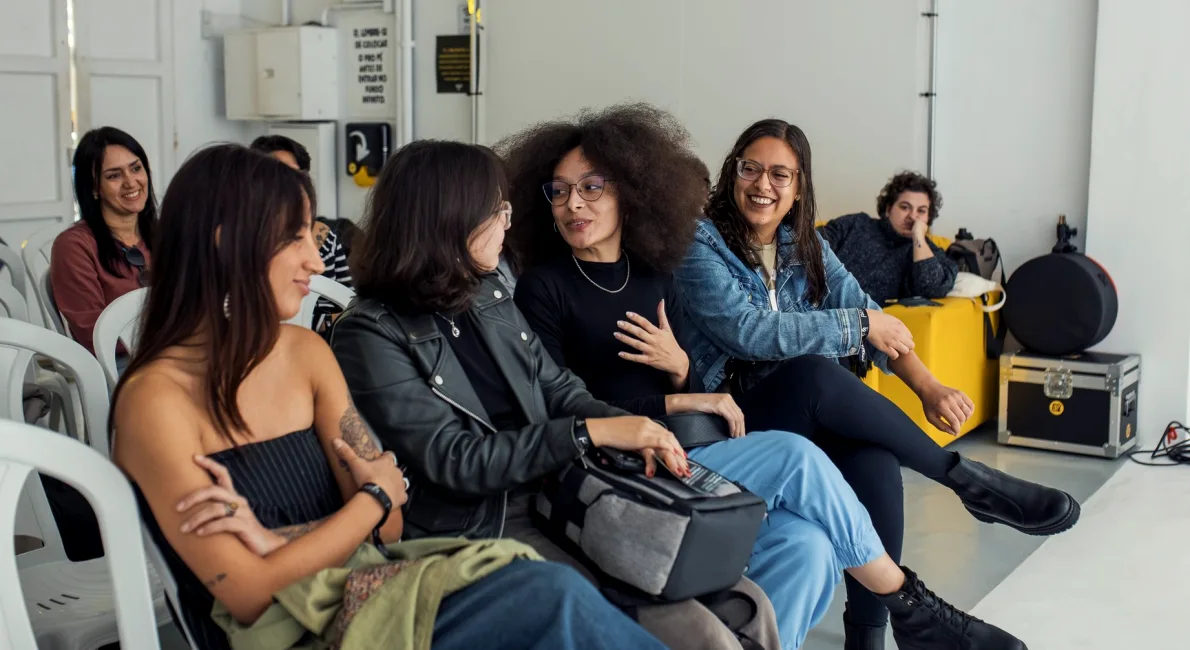
The circle itself is a plain tool. There is no stage, no microphone and no front row. Everyone sits at the same height, close enough to hear a quiet voice, and nobody is asked to perform. That simple arrangement does a surprising amount of work before a single word is spoken.
The room and the chairs
I arrive early to set the room, and the chairs are the first decision. We use an even ring with no gaps large enough to hide in and none so tight that knees touch. Eight to ten seats is comfortable; beyond that the circle starts to feel like an audience.
A small table sits to one side with water, tissues and a pad of paper. I leave the middle of the circle empty on purpose. Members sometimes want to place a printed photograph or an object there, and an open floor gives them the choice without making it expected.
Lighting matters too. Overhead glare makes people stiff, so we use lamps where the hall allows it. In these mid autumn weeks the early dusk helps; the room settles into a softer light by the time we begin.
- An even ring of chairs at the same height
- Lamps rather than overhead lights where possible
- An empty centre for optional objects or prints
- Water, tissues and paper within reach
Ground rules we read aloud
Every evening begins with the same short agreements, read aloud even when most faces are familiar. What is said in the circle stays in the circle unless the teller says otherwise. Nobody is pressed to speak, and passing is always an acceptable answer. We listen without fixing, advising or comparing.
I read them in my own words each time, because a recited list can sound like a legal notice. The point is not ceremony. It is to remind people that the room works on shared trust, and that trust is easier to keep when it has been named out loud.
New members often tell me afterwards that the rules were what let them relax. They knew in advance what would not happen to them, and that is a quieter kind of safety than any reassurance I could give in the moment.
Pacing: timers, pauses and the talking object
Pacing is the tool I rely on most. We use a small wooden spoon as a talking object, passed hand to hand. Whoever holds it speaks; everyone else listens. It sounds almost too simple, yet it stops the overlapping chatter that can flatten a hesitant story.
I keep a quiet kitchen timer in my pocket, but I rarely show it. Most turns run five to eight minutes, and I only step in when someone is clearly searching for a way to stop. A pause of ten seconds can feel endless to the teller and invisible to the room, so I have learned to wait.
After each story we leave a breath of silence before anyone responds. That gap lets the listeners take in what was said rather than rushing to reply, and it often shapes the kinder, more specific comments that follow.
- A wooden spoon passed from hand to hand
- Turns of about five to eight minutes
- A held silence after every story
Consent when a story involves other people
Personal stories are rarely only about the teller. A story about a difficult year at home includes a spouse, a parent or a neighbour who is not in the room. Part of our method is to ask, gently, who else appears in the story and how they might feel about it being retold.
We talk about changing names, leaving out identifying details and deciding whether a piece is meant to stay spoken or may one day be written or paired with a photograph. Members who want to share work beyond the circle are asked to speak with the people involved first.
This is not a checklist handed out like paperwork. It is a conversation, and it often improves the story. When a teller considers how a sister would hear a scene, the telling becomes fairer and usually more precise.
Shaping a story afterwards
Some members come only to listen and speak, and that is entirely enough. Others want to turn a story into writing, and for them we offer a second, lighter step: a short conversation about structure, a beginning that earns attention, and an ending that does not over-explain.
I draw here on my years in radio production. A spoken story often needs fewer words than people expect, and the most vivid detail is usually small: the sound of a screen door, the colour of a coat. I encourage members to keep those details and cut the commentary around them.
Nothing leaves the circle without the teller's agreement, and a story can be withdrawn at any stage. That freedom to take something back is what makes it easier to offer it in the first place.
A story circle depends on ordinary things done carefully: a ring of chairs, a shared set of agreements, a wooden spoon, a held silence and an honest question about who else is in the story. None of it is complicated, and that is the point. If you are curious, come and sit in on an evening. You will not be asked to speak before you are ready.